Loading...
Serving Highland, CA and surrounding areas. (909) 737-6946
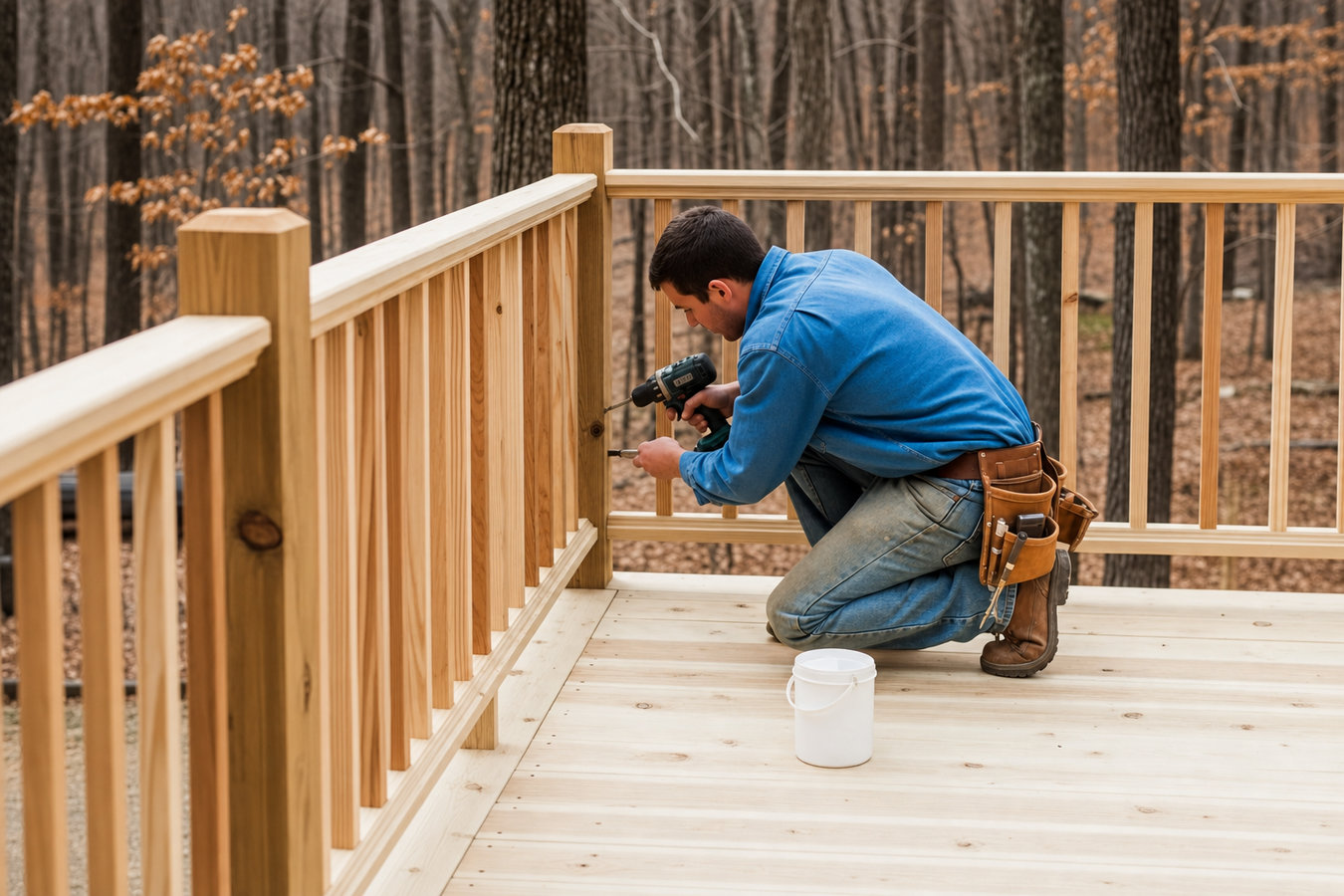
A deck railing that wobbles or looks worn undercuts everything else about your outdoor space. We install railings that meet California code, handle Inland Empire heat and wind, and give you confidence every time someone leans on them.
Deck railing installation in Highland, CA covers removing old or unsafe railing and installing a new system anchored to code - most standard decks are completed in a single day of on-site work, with San Bernardino County permit review typically adding one to three weeks before the crew can start.
If your deck sits more than 30 inches above the ground, California requires a railing - full stop. But a railing that passes inspection is not the same as a railing that will still feel solid three summers from now. Highland's combination of intense UV, triple-digit heat, and periodic Santa Ana wind events is genuinely hard on outdoor materials, and a railing that was not built for those conditions will start showing it within a few years. The most common failure point is the post anchoring. When posts are not anchored with the right hardware for local wind and seismic loads, they loosen over time even if everything looked tight on the day of installation. If you are also planning to build or replace the deck itself, pairing the railing installation with a multi-level deck build lets us design both systems together so the posts integrate properly with the framing rather than being bolted on afterward.
Because Highland is within unincorporated San Bernardino County, your permit application goes through the county's Building and Safety Division rather than a city office. A contractor who is used to pulling city permits will need to learn a different process here - and that unfamiliarity is one of the more common sources of project delays in this area. We handle the county permit process on your behalf, which means you do not have to figure out the paperwork or follow up with the county yourself. Homeowners thinking about a broader outdoor project sometimes also look at a custom deck design and build to address the deck platform and the railing system in the same permitted project.
Stand at the corner of your deck and push firmly on the top rail. If it moves, sways, or feels loose at the base, the posts are no longer anchored securely. This is a safety issue - a railing that gives way under pressure offers no real protection, especially for children or elderly family members.
Highland's intense summer sun and dry heat accelerate wood deterioration. If your railing posts or balusters are visibly cracked, have rough splintery edges, or have faded to a weathered gray, the wood has lost structural integrity. A railing in this condition is also a liability - splinters can injure bare hands and feet on a deck used for entertaining.
If you are building a new deck or modifying an existing one so that any part of it sits 30 inches or more above the ground, California requires a railing to be installed. This is not optional - it is a condition of passing your building inspection, and no permit will be signed off without it.
If your property is in one of Highland's designated fire hazard areas and your current railing is untreated wood, you may not meet current California building standards for ignition-resistant construction. Beyond code compliance, a combustible railing close to your home's structure is a genuine risk during wildfire season. Replacing it with a non-combustible material is both a safety upgrade and a potential insurance consideration.
We install wood, composite, aluminum, vinyl, and cable railing systems - and every installation includes a properly anchored post system designed for the local seismic and wind load requirements that San Bernardino County's building standards specify. Railing height must meet California's minimums - 36 inches for most residential decks, 42 inches on higher structures - and baluster spacing must be tight enough that a 4-inch sphere cannot pass through, a rule designed specifically to protect young children.
Material choice matters more in the Inland Empire than in most other parts of California. Wood railings require regular sealing in Highland's climate to prevent cracking and splintering - without it, most wood species will show visible deterioration within three to five years. Powder-coated aluminum and composite are both significantly more resilient here: they do not absorb heat the same way, they resist UV fading, and they require almost no maintenance to stay structurally sound. For homeowners in fire hazard zones, aluminum and composite also meet California's ignition-resistant construction requirements where wood may not. If your project involves a new deck platform as well as new railing, a custom deck design and build lets us engineer the railing posts into the framing from day one rather than retrofitting them after the fact.
Best for homeowners who want a traditional look at the most accessible price point - wood railings installed correctly and sealed regularly can hold up in the Inland Empire climate for many years.
Best for homeowners who want the warmth of a wood look without the annual maintenance - composite holds its color and structural integrity through Highland's heat and UV without needing to be sealed or stained.
Best for homeowners in fire hazard zones or anyone who wants a low-maintenance, non-combustible railing that resists fading and corrosion in Southern California's climate.
Best for homeowners who want to preserve open sightlines - particularly valuable on a multi-level deck or a deck with a view of the San Bernardino Mountains - while still meeting California code requirements.
Highland's position at the base of the San Bernardino Mountains shapes railing requirements in two ways that most homeowners do not expect. First, parts of Highland - particularly neighborhoods near the foothills - fall within areas designated as high or very high fire hazard zones by the state. In those zones, California's building code may require deck components, including railings, to meet ignition-resistant standards. A contractor who does not check your property's fire zone status before recommending materials is skipping a step that could mean your finished railing does not pass county inspection. We verify fire zone status upfront so you are not surprised at the permit stage. Homeowners in Mentone and San Bernardino face similar fire zone and county permit requirements, and our familiarity with that process carries over directly.
The county permit process is the second area where local knowledge matters. Highland is an unincorporated community, which means permit applications go through San Bernardino County Building and Safety rather than a city building department. The forms, the inspection stages, and the review timelines are different from what contractors experience in incorporated cities nearby. We work through the county process regularly, which means your project does not get delayed because someone is navigating an unfamiliar system for the first time. HOA requirements are also a factor in many of Highland's newer neighborhoods - we ask about your HOA upfront and factor any required approval process into the project timeline from the start, so it does not become a mid-project surprise.
Reach out by phone or form and you will hear back within one business day. Let us know the size of your deck, how high it sits off the ground, and whether you have an HOA - those three details shape everything about the project.
We visit your property, measure the deck, check the condition of the existing structure, and walk you through material options in person. You receive a written estimate that breaks out labor and materials separately - if a contractor won't give you that in writing, that's a red flag.
For most railing installations in Highland, we pull a permit through San Bernardino County Building and Safety before work begins. We handle all the paperwork and follow up with the county so you do not have to. Plan for one to three weeks for permit processing before the crew can start.
The crew removes the old railing if there is one, anchors the new posts, attaches the rails, and fills in the balusters - most standard jobs are finished in a single day. A county inspector then verifies the railing height, post stability, and baluster spacing. Before we leave, we walk the railing with you so you can confirm everything feels solid.
Free on-site estimates, itemized written quotes, county permits handled - no obligation to move forward after the visit.
(909) 737-6946Highland is within unincorporated San Bernardino County, so permits go through the county rather than a city building department. We know the San Bernardino County Building and Safety process - the forms, the inspection stages, and the typical timeline. That knowledge keeps your project on schedule and your railing properly documented at resale.
The Inland Empire sits in an active seismic zone, and Santa Ana wind events can push gusts past 60 miles per hour. We anchor railing posts to handle both ground movement and lateral wind load - not just normal everyday use. A railing that feels solid on a calm day but loosens in a windstorm was not built to local conditions.
Parts of Highland are in areas designated as high or very high fire hazard zones by the state of California. We check your property's fire zone status before recommending materials, and we can install non-combustible aluminum or composite railings that meet California's ignition-resistant construction standards where required.
We have installed deck railings throughout Highland and the surrounding Inland Empire since 2017. We know the East Highland Ranch HOA approval process, the county inspector requirements, and which materials actually hold up after several summers here - experience that reduces delays and surprises on your project.
A properly permitted, correctly anchored railing protects your family, meets California code, and holds up for years without surprise repairs. You can verify any contractor's California license through the California Contractors State License Board, and review fire hazard zone information for your property through CAL FIRE's Fire Hazard Severity Zone maps.
Build a new deck from the ground up with railings designed into the project from day one, so the structure and safety system are engineered together.
Learn MoreMulti-level decks require railing on every level that sits more than 30 inches above grade - we install both the deck structure and the railing system as one integrated project.
Learn MoreCounty permit timelines mean the sooner you reach out, the sooner your project can begin - contact us today for a free on-site estimate.