Loading...
Serving Highland, CA and surrounding areas. (909) 737-6946
Cedar is one of the most beautiful deck materials available - and it can hold up to Highland summers when it is built and finished the right way. We handle every detail, from permit to final walkthrough.
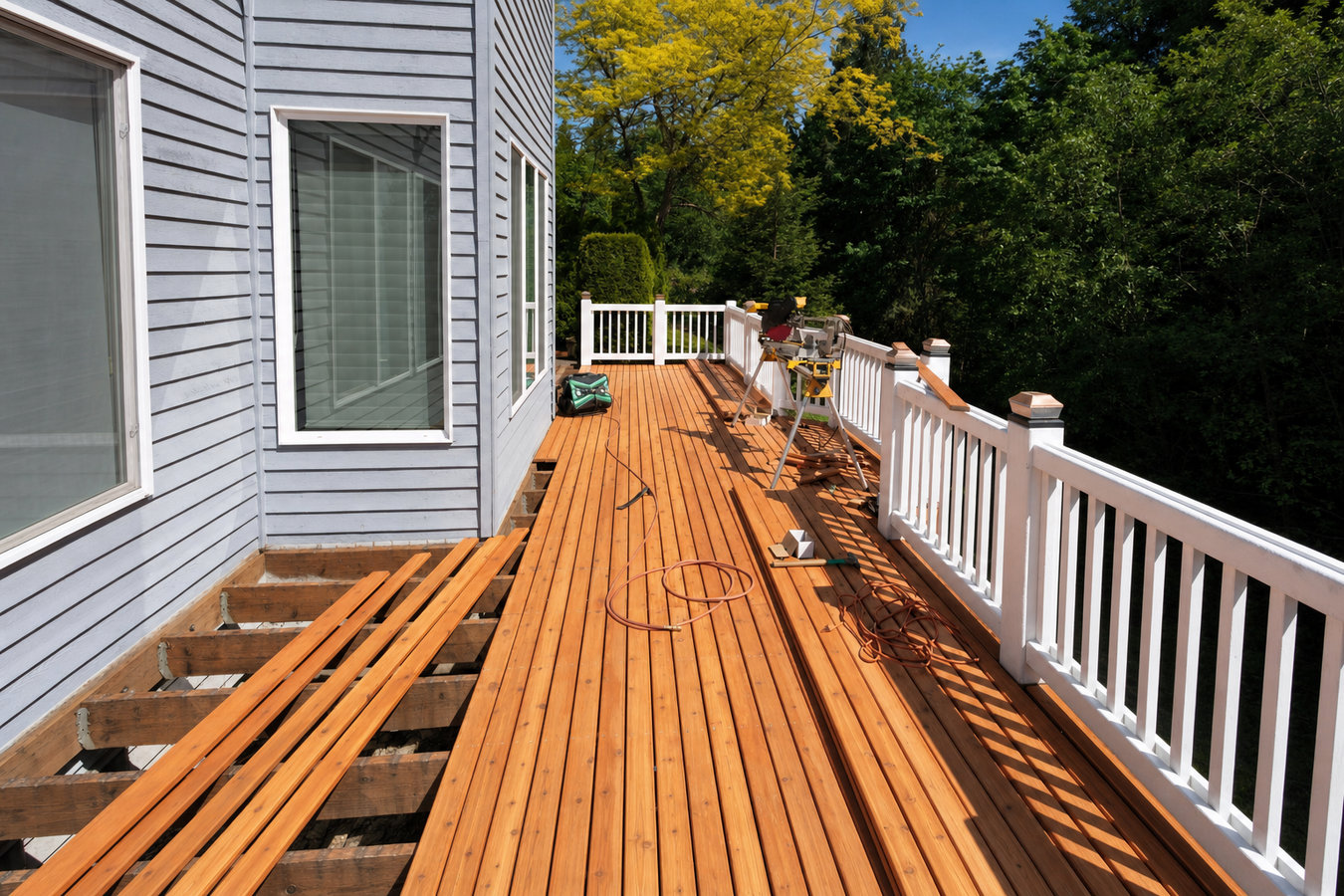
Cedar wood deck construction in Highland, CA means setting concrete footings, framing with pressure-treated substructure, and laying cedar boards on top - most standard residential decks in the 200- to 400-square-foot range take three to five working days on-site once permits are approved, with two to four weeks for county permit review beforehand.
Cedar is a popular choice for homeowners who want an outdoor space that feels natural and warm rather than industrial. It takes stain and sealant evenly, which gives you real control over the final look. If you are comparing cedar to synthetic options, our deck repair and replacement page discusses how different materials hold up over time in Highland's climate - useful context before you commit to any material.
The main thing to understand about cedar in this climate is that Highland's heat and sun demand more frequent maintenance than cooler parts of California. A contractor who walks you through a realistic care schedule during the build is one worth trusting - because a cedar deck that goes unsealed for too long in the Inland Empire sun will show it within a season or two.
If your backyard is open concrete or bare dirt with nowhere comfortable to sit or entertain, a cedar deck gives you a defined outdoor area that actually gets used. In Highland's warm climate, a well-placed deck with some shade can become one of the most-used parts of your home through the long spring and fall seasons.
Highland's intense summer heat and low humidity dry out wood decking faster than in coastal cities. If existing boards are rough to walk on barefoot, flex underfoot, or have visible splits along the grain, the wood has likely dried past the point where sealing will help. Replacement with fresh cedar - properly sealed from the start - is the more practical path.
A deck that moves when you walk on it or has railings that shift under pressure is a safety issue, not just a cosmetic one. This kind of movement usually means posts, footings, or connection hardware have deteriorated. It calls for a professional assessment before anyone else uses the structure.
Dark discoloration, soft wood, or a musty smell near where the deck meets your house are signs that moisture has gotten into the structure. In Highland, this often starts at the ledger board if the original flashing was done poorly. Soft or discolored wood in that area means getting a contractor out now, before damage spreads to your home's framing.
We build cedar decks from the footings up, using hardware rated for outdoor use in hot, dry climates and framing methods designed for Highland's soil conditions. Every project includes a site visit to measure grade, check soil type, and identify any HOA constraints before we draw up a design. If you are looking at a full replacement of an existing structure, we handle demolition and haul-off before building new. For homeowners who want a lower-maintenance surface on the same substructure, our pressure-treated wood deck construction page describes another solid natural option at a different price point.
We manage the full permit process - application through San Bernardino County, coordination of inspections at the required stages, and HOA submission if your neighborhood requires it. The goal is a finished, inspected deck you can use immediately, with clear guidance on the first sealing cycle so the cedar keeps its color and stays structurally sound through Highland's intense summers.
Best for flat yards where simplicity and a natural look matter most - the most accessible entry point for adding outdoor living space.
Ideal for Highland foothill properties where the yard slopes and a level outdoor platform needs to be built above the grade.
For homeowners replacing an old or damaged deck - we remove the existing structure and build new from the footings with fresh materials.
Suited to any elevated build requiring code-compliant stairs and railings, designed to match the cedar aesthetic throughout.
Highland sits at roughly 1,200 feet in the San Bernardino Valley where summer temperatures regularly exceed 100 degrees and year-round UV exposure is intense - far more than coastal California. Cedar contains natural oils that resist moisture and insects, but in this climate those oils dry out faster, which is why the sealing schedule for decks in Highland is every one to two years rather than every three. A contractor who understands this will set the right expectations from day one, not after the first season leaves your cedar looking gray and dried out.
The clay soils found in parts of the Inland Empire, including areas of Redlands and Highland, expand when wet and contract when dry. Over time, this movement can shift deck footings if they are not set deep enough and sized for local conditions. We assess soil type on every site visit and design footings accordingly - because a deck that shifts or develops gaps within a few years is a failure of the planning phase, not just bad luck.
We ask basic questions about your yard size, whether the deck will attach to the house, and whether you have HOA requirements. This call takes ten to fifteen minutes and helps us prepare for the estimate visit so we are not starting from zero when we arrive.
We visit your yard to measure, check the grade and soil, and talk through what you want. You will get a written estimate within one business day of the site visit that breaks down materials, labor, and permit costs - no surprises later.
Once you sign a contract, we submit the San Bernardino County permit application and HOA submission at the same time - running them in parallel to avoid adding weeks to the timeline. Plan for two to four weeks before all approvals are in hand.
We dig footings, let them cure, then frame and lay the cedar boards. The county inspector checks the work during construction and after completion. When the final inspection passes, we walk you through the deck and give you a clear care schedule for the first season.
Free written estimate, permit handled, no-pressure process. Call or submit a request and we respond within one business day.
(909) 737-6946We submit the San Bernardino County permit application, coordinate inspections, and track approvals on your behalf. You get a copy of the final permit sign-off, which protects you if questions come up during a future home sale.
Every cedar deck we build uses hardware rated for outdoor use in hot, dry conditions and board spacing designed for Highland's airflow needs. We spec the right UV-protective finish for the first sealing cycle so the wood does not dry out prematurely in Inland Empire summers.
Many Highland neighborhoods, especially those built in the 1990s and 2000s, have HOA design review requirements. We have navigated these processes before and help clients choose designs that are likely to get approval the first time, saving weeks of back-and-forth.
Highland and the surrounding San Bernardino Valley have areas with expansive clay soils that shift with moisture. We size and set footings for local conditions - a detail backed by standards from the American Wood Council on wood construction best practices. A deck that does not account for soil movement will show it within a few years.
Every one of these details matters when building in Highland's climate and regulatory environment. Call us or submit a request and we will give you honest answers and a written estimate before any work starts.
If your existing cedar or wood deck has structural issues, we inspect the full build and give you an honest repair vs. replace recommendation.
Learn MoreA durable lower-upfront-cost alternative to cedar, built on the same permit-managed, climate-aware foundation we bring to every project.
Learn MorePermit slots and contractor schedules fill up fast in spring - call now or submit a request and we will lock in your estimate before the busy season peaks.